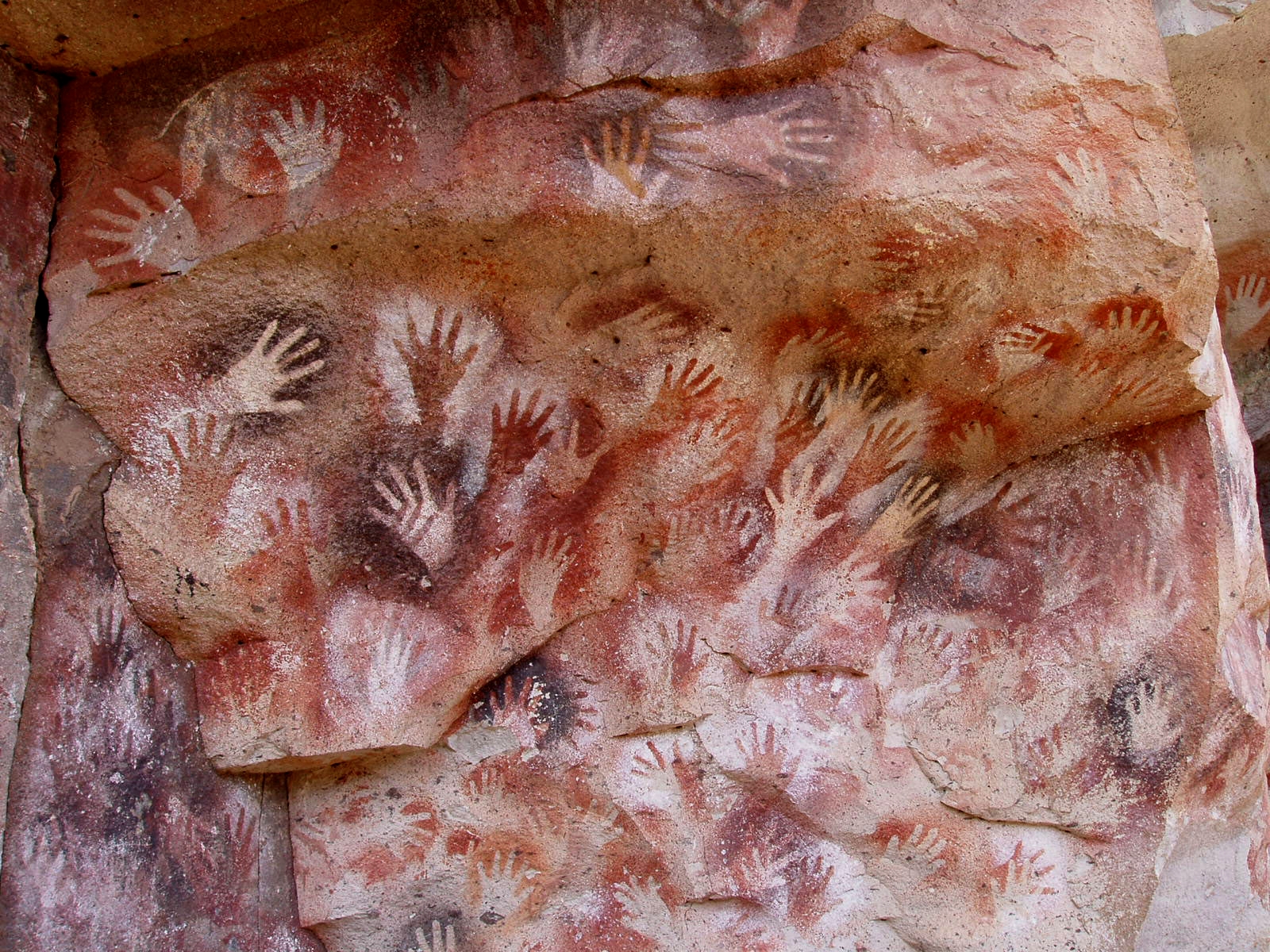
There is a canyon in Santa Cruz Province, Argentina, where a rock wall holds several hundred human hands, and none of them were drawn.
They are stencils, which means that someone pressed a living hand flat against the stone, took a hollowed bone into their mouth, and blew a suspension of ground ochre and manganese across it, and when the hand came away the hand was gone, leaving only the shape of its absence fixed in mineral. The oldest of them are roughly nine thousand years old. Almost all of them are left hands, which tells us that almost all of them were made by someone holding the tool in their right.
I want to be exact about what happened in that canyon, because it is the founding act of every image that has been made since. A person used a machine, which is to say a bone tube and a lungful of air and a powder they had to grind themselves, in order to produce a mark that no hand could have produced alone. And the resulting image is not a picture of a hand at all, because nobody drew anything and nothing was represented. The hand is simply the part that was subtracted.
The oldest images we have of ourselves are the negative space around a tool.
We have been arguing about tools ever since, and in all that time we have never once won such an argument by examining one.
I. Two ways an image can meet an eye
Set the technology aside for a moment, because there is an older distinction underneath all of this, and everything worth saying is downstream of it.
An image can function as a mirror or it can function as a window, and these are not two categories of object but two things that can happen when a gaze lands on a surface.
The mirror stops the eye, because it has been polished until you forget you are looking at a surface at all, and what comes back to you is your own appetite, confirmed and given a face. The mirror is sufficient, which is precisely its function: the gaze arrives, is filled, and travels no further.
The window does the opposite, allowing the gaze to pass through it toward something the image itself cannot contain. A window is not sufficient and is not attempting to be, since its entire labor consists of failing to be a wall.
The same canvas can be either one, and the same photograph can be either one, so that a Rothko is a window for one person standing in a gallery and expensive wallpaper for the person standing beside them, and nothing in the pigment itself decides which. This is the only tool we will need for the rest of the argument, so it is worth holding onto.
II. The experiment
In May of 2026 an artist posted a picture online and captioned it, deadpan, as something they had just generated in the style of a Monet painting, then asked people to describe in as much detail as possible what made it inferior to a real Monet. The invitation was the whole trap, and the internet walked straight into it. The replies arrived fast and certain and contemptuous, calling the work slop and soulless and dead, and insisting, as people always insist, that you can always tell.
The painting was a real Monet.
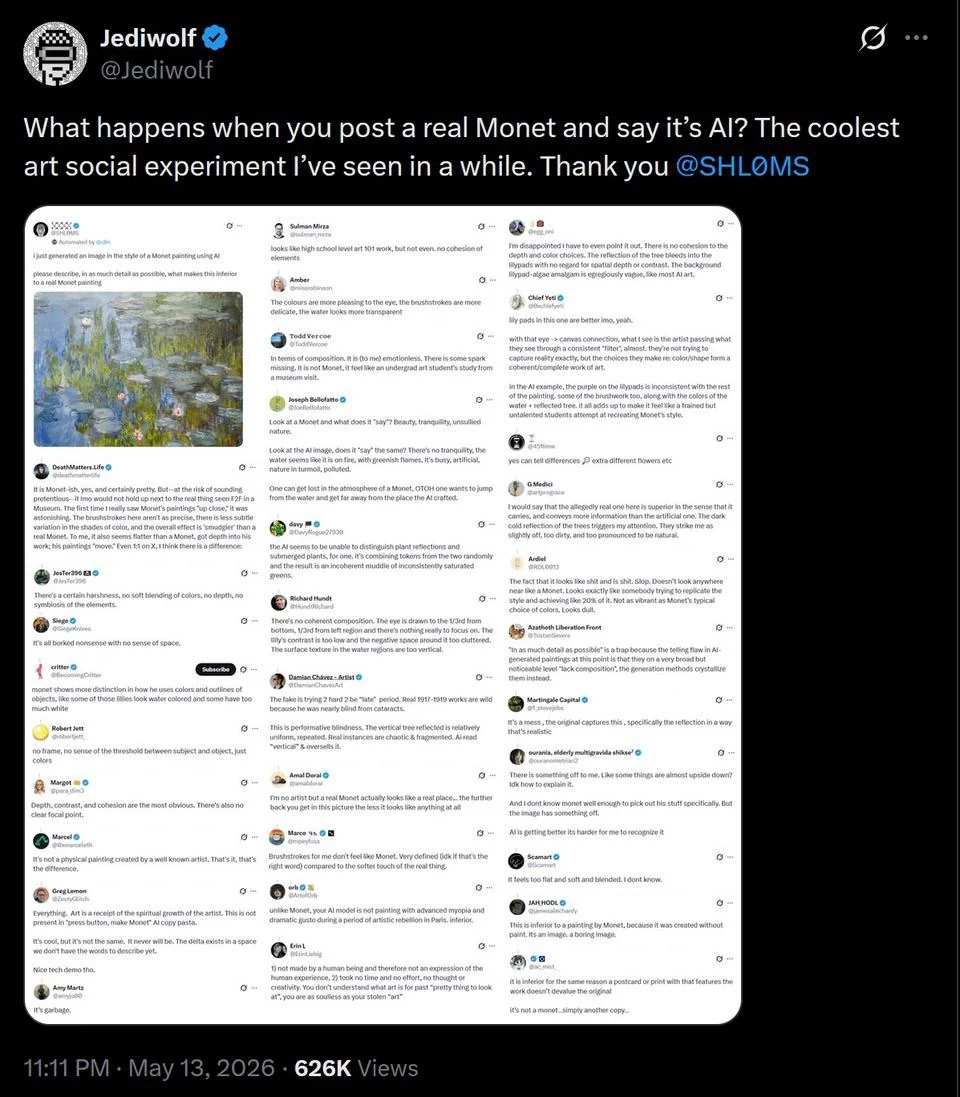
It is worth being specific about what happened in that thread, because the failure was not random. Commenters did not simply dislike the picture; they built a case against it. They called it a high-school project and a museum gift-shop print, said it had no cohesion, no depth, no focal point, no threshold between subject and object. They found flaws that were not there, confidently pointing to lilypad reflections that broke the water and brushwork that gave the artificial hand away, describing artifacts of a machine in a surface that a machine never touched.
Only a handful hedged, and even they hedged in the wrong direction, conceding that AI was simply getting good enough that it was becoming harder to tell. Nobody could tell. Everybody was certain that they could.
The mechanism underneath is not stupidity, it is the effort heuristic. We do not price a picture by what is on the canvas, we price it by the human labor we imagine standing behind it, so the instant that presumed labor is withdrawn, the same brushstrokes register as evidence of laziness rather than mastery. The pigment did not change. The story we were told about the hand that made it changed, and the eye rewrote everything downstream to agree.
The comfortable reading of this is that the internet is stupid, but the harder and more interesting reading is that we do not perceive authorship and we never have, because what we actually perceive is the frame. When we are told a thing is machine made, the eye goes hunting for the machine and reliably finds it, and when we are told the same thing is a masterpiece, the eye finds the master instead. The caption arrives before the image does, and the image obeys.
John Berger reached this conclusion in 1972 when he observed that the way we see a thing is shaped by what we already believe about it. He was writing about oil painting and advertising, and he was describing a comment section fifty years before it existed.
Which means that the confident aesthetic verdict, the claim that you can always tell, was never a judgment about the work at all but a judgment about the label attached to it. And as the years pass, more people will look at more images and will simply not know, which is not a crisis arriving so much as a crisis returning.
III. The very old argument
Every technology that has ever touched the image arrived to the same funeral, and the eulogy is delivered almost word for word each time.
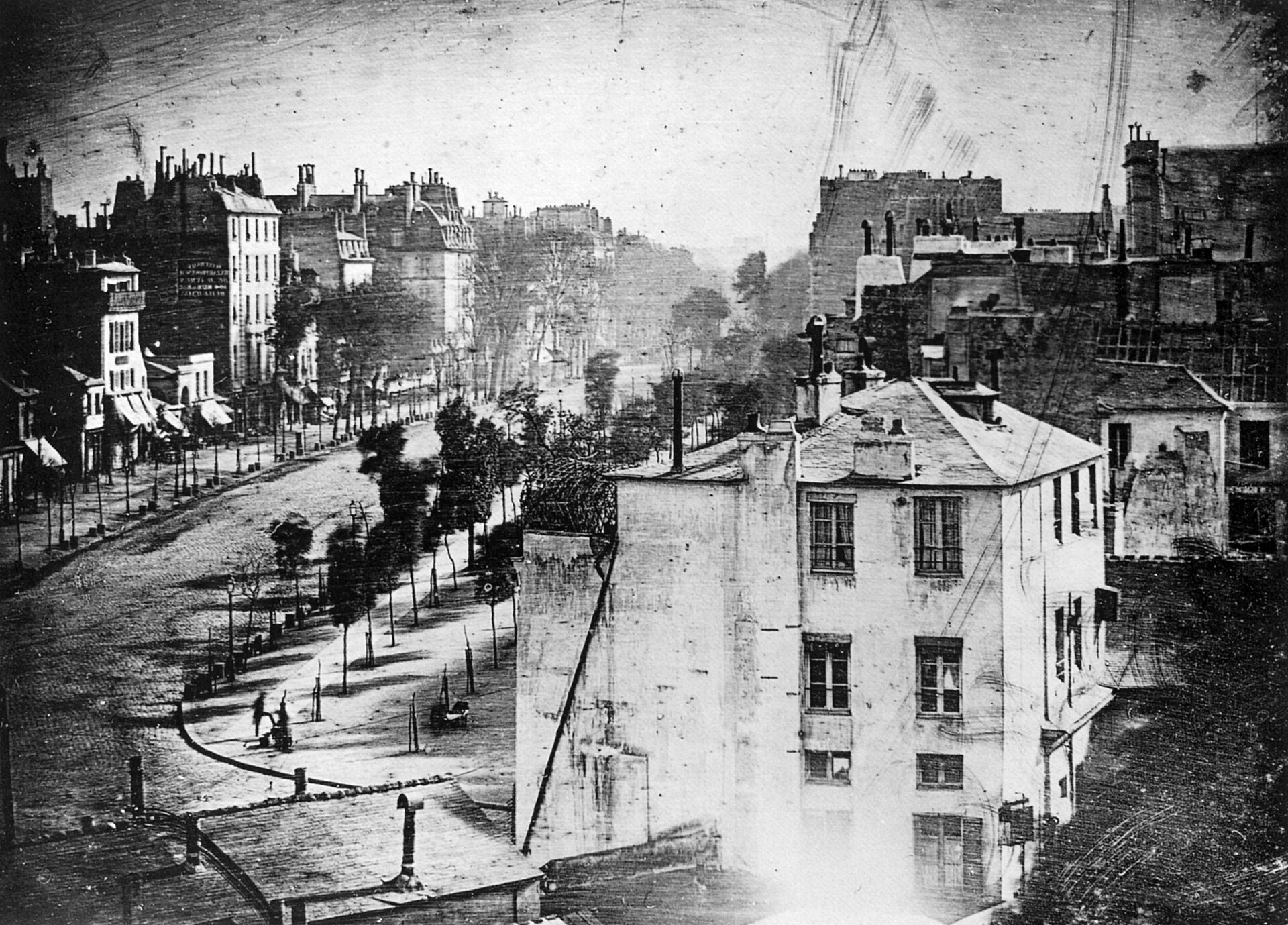
Photography emerged in 1839 and was received not as a new art but as the end of art itself, with Baudelaire, writing about the Salon of 1859, dismissing it as a refuge for painters who had failed and warning that it would corrode the public's capacity to imagine anything at all. The serious critical consensus of the period held that a machine cannot see, and that therefore whatever it produced could not properly be looked at.
There is a line everyone quotes from those years, in which the painter Paul Delaroche is said to have looked at a daguerreotype and announced that from today, painting is dead. It is the most famous sentence ever spoken about technology killing art, and historians have never been able to establish that he said it, which means that the defining quotation of the entire anti-technology tradition appears to be something we invented because we needed it to exist.
Then came the rest of the century, and Stieglitz, and Cartier-Bresson, and Ansel Adams standing in a darkroom for hours moving light that had never been in the scene, deepening a sky here and holding back a shadow there, printing the same negative differently for forty years. Moonrise, Hernandez is among the most heavily manipulated photographs in the canon and is received by the public as a document of pure fact.
When sound came to cinema at the end of the 1920s, tens of thousands of theater musicians lost their livelihoods within a few years, and the American Federation of Musicians bought newspaper advertisements against what they called canned music, warning that mechanical reproduction would hollow out the art of performance itself. They were right about the jobs and they were wrong about the music, and both of those things need saying in the same breath, though usually only one of them gets said.
Photoshop shipped in 1990 and Auto-Tune followed in 1997, and Jurassic Park, the film that persuaded an entire generation that dinosaurs had somehow been photographed, contains roughly fourteen minutes of dinosaur footage, of which only about six are computer generated, the remainder being latex and hydraulics and rod puppetry and the oldest device in all of cinema, which is refusing to show you the thing.
Then came thirty years of fashion photography constructing faces that do not exist, which caused real and measurable harm, particularly to the young, and it is worth noticing that the response was never to abolish the tool. The response was disclosure, and labeling laws in France and elsewhere, and a slow and partial and still unfinished maturation of taste.
Half of everything we love is manufactured, and we simply agreed, across a century, to stop calling it a lie.
IV. The strongest version of the other side
If this essay did nothing but the above, it would be propaganda with footnotes, so here is the case against my position, made as well as I am able to make it, because I think it is a serious case.
The first objection is that every previous tool extended a hand rather than replacing one, since the camera still required someone to stand in a particular place at a particular moment and Photoshop still required someone to decide, whereas these systems were trained on the finished work of millions of people who did not agree to it, were never paid for it, and are not credited anywhere, while the output competes directly against them. That is not a philosophical objection but a labor objection, and labor objections have historically turned out to be correct far more often than the people arguing against them would like to admit.
The second objection is that the apprenticeship is quietly disappearing, because designers have never learned their craft by studying it but by doing three years of unglamorous production work badly and then gradually less badly, and that production work is precisely what gets automated first, which raises the possibility that we are removing the ladder while cheerfully insisting that the roof is fine.
The third objection is that when the marginal cost of an image falls to zero, images become abundant, and everything abundant eventually becomes noise, so that a world containing ten thousand times more pictures is not necessarily a world containing more seeing, and may well be a world containing a great deal less of it.
I do not think any of these amount to hysteria, and I think they are the correct objections precisely because they are aimed at the right targets, which are consent and credit and compensation and training data, rather than at the tool itself, which cannot hear us and would not care if it could.
That distinction matters enormously, because the question of whether a system took something without asking is a question that has an answer, whereas the question of whether machines should be allowed to make pictures is not really a question at all but an anxiety wearing the costume of one.
V. What the slop actually is
Now we can look at the thing everyone points to.
Open any stock library and watch it silting up with images that are technically fluent and entirely vacant, full of glassy light that has no source and symmetry no photographer would ever have chosen and faces that carry the correct number of features while somehow failing to remember what a face is for.
The word people reach for is soulless, and I think that word gets it exactly backwards.
The problem is not that these images contain nothing. The problem is that they contain everyone, because a generative model is trained on the accumulated visual appetite of an entire civilization and then hands back its center of mass, which means that what you are looking at is not an absence of human wanting but the statistical average of all of it, and that is a far worse thing, since the average of every desire is a desire that belongs to nobody in particular.
René Girard built his life's work on the observation that desire is imitative, that we want what we have seen other people wanting, and these systems industrialize that loop and then close it completely, showing you the aggregate of what has already been wanted so that you want it too, and make more of it, and it trains on what you made. There is no natural stopping point anywhere in that circuit, because there is nothing outside the loop for any of it to be aimed at.
What that produces is a mirror, and it is a mirror not because a machine made it but because the gaze arrives, is filled, and goes nowhere at all. A mirror is precisely and reliably what you get whenever nobody involved in the process wanted anything specific.
VI. The man who refused the prize
In 2023, Boris Eldagsen entered an image into the Sony World Photography Awards and won his category with a picture of two women, one standing behind the other, rendered in the visual grammar of mid century European portraiture, complete with grain and shallow focus and that particular melancholy belonging to a photograph that has survived something.
It was generated. He had said so beforehand and nobody had acted on it, and when he won, he refused the prize.
The reason he gave is the part that almost nobody quotes correctly. He did not say the image was bad, and he did not say the tool was illegitimate, but rather that images of this kind should not compete under the word photograph, because that word makes a promise, namely that a moment occurred and that somebody was standing there when it did, and the artifact cannot keep that promise.
He was not attacking the picture. He was attacking the frame around it.
I think that is the most serious act anyone has performed in this entire argument, and it points directly at where the ethics actually live, which is not in the pixels but in whatever you claim about them.
VII. The window
Here is what actually changed inside our studio, and it has nothing whatsoever to do with production speed.
Briefs used to arrive as adjectives, asking for something modern but warm, or bold but not aggressive, or premium but approachable, and every one of those words means something different inside every skull that happens to be holding it, so that two full rounds of work would go to translation before anyone got near the real problem.
Now clients arrive carrying images, which are rough and generated and occasionally strange, and were often made at eleven at night because somebody got excited and could not wait until morning.
What those images carry is not a design direction. It is a window, which is to say the first available look at the thing the client had been seeing all along and could never quite say out loud, and the image is not sufficient and is not trying to be, because the gaze passes straight through it toward an intent that had never been articulated before.
It was made by a machine, in ninety seconds, by a person with no training at all, and the category has never cared about any of that, because a window is a window.
So when someone sends us one, we do not sigh. We celebrate it, because a person cared enough about their own work to try to show us what they meant, and there is no better condition from which to start.
Then we begin.
VIII. Where the cost is actually paid
None of this touches the part of the work that is hard, and I want to be precise about why that is.
The distance between an image that captures a feeling and an identity that survives contact with the world is enormous, and that distance is the entire job, encompassing the knowledge of why a form is right rather than merely pleasant, and the ability to hold a system together across a hundred applications that nobody thought to specify, and an understanding of a business deep enough to know what it is actually asking for, which is almost never what it said.
All of that reduces to a single capacity, which is the capacity to refuse.
Taste has never been the ability to generate, and it is not the ability to generate now, because taste is the accumulated record of everything a person has thrown away, and it can only be built by someone who paid for the throwing away in hours and in argument and in the meeting where you defend the harder option and might well lose the account for it.
The machine drove the cost of the mark down to nearly zero, and it did not lower the cost of the refusal by a single cent, so that everything that matters in this profession has quietly relocated itself to the second thing while most of the industry is still busy measuring the first.
IX. So, hell?
Let us take the fire seriously, since the title raised it.
Fire is the one technology that every human being inherits, and it has burned cities to their foundations and it has also cooked every meal any of us has ever eaten, and nobody seriously argues about which of those fire really is, because we stopped asking that question so long ago that it now sounds childish to raise it.
But notice that we did not stop asking questions. We replaced one bad question with four good ones, and we ask them so automatically that we no longer hear ourselves doing it. Who is holding it, and what are they trying to do with it, and how much of it, and do they know when to stop.
That is the entire ethics of fire, and it is also the entire ethics of a knife, which is a threat in an alley and dinner in a kitchen and the same steel in both places, and nobody in the history of the world has ever gotten anywhere by interrogating the blade.
So, will AI send creative work to hell?
The question is a question about the fire, which means that it is the wrong question, and asking a wrong question reliably gets you the wrong hell.
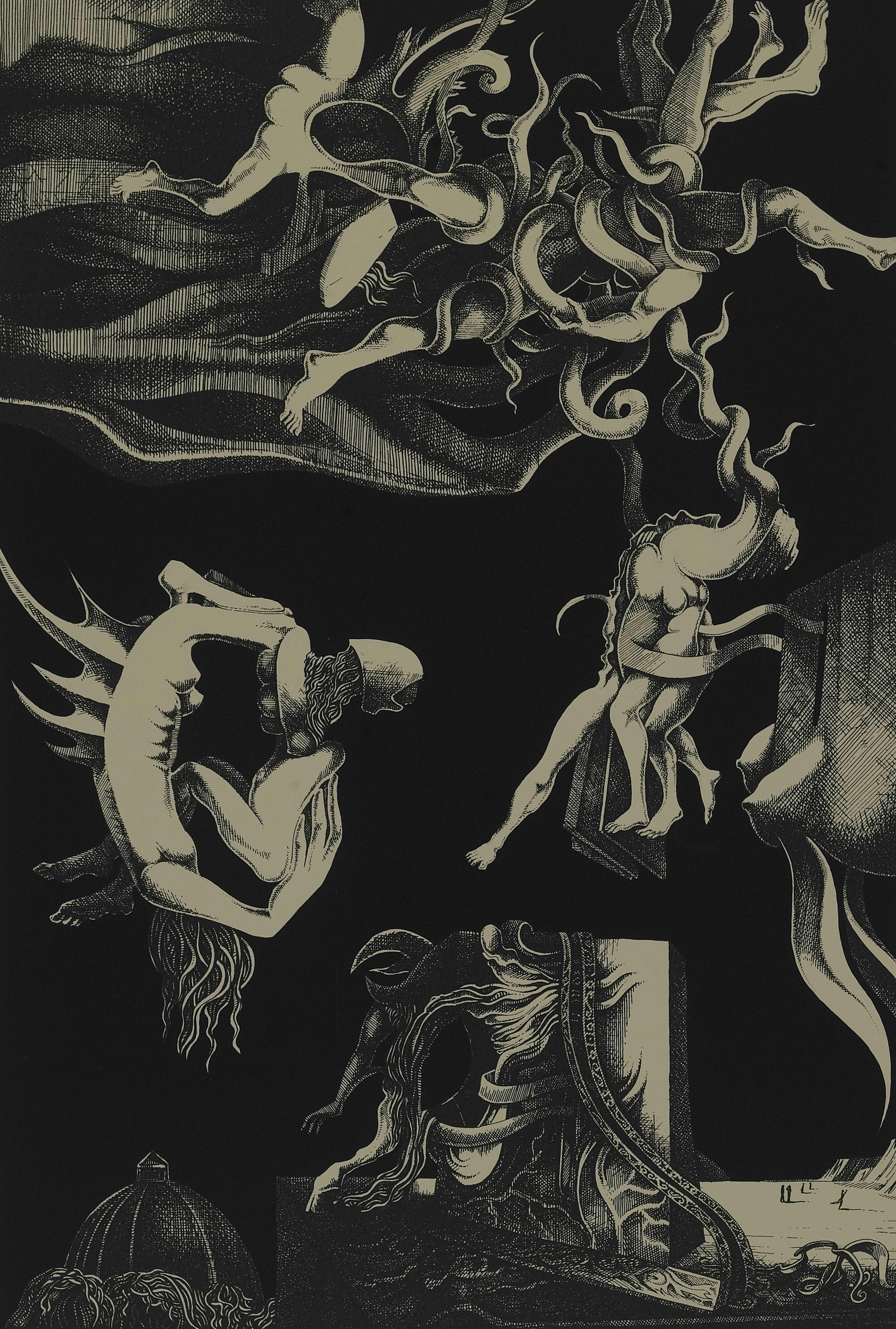
Because everyone who pictures hell pictures flames, and Dante did not. The Inferno descends in circles, and the sinners grow worse as it goes, and the reader keeps expecting the place to get hotter, and instead it gets colder the whole way down. The bottom of Dante's hell is Cocytus, a frozen lake, with the damned sealed into the ice, and Satan is down there at the center of it, waist deep and not burning at all, beating his enormous wings endlessly, and the wind those wings generate is precisely the thing keeping the lake frozen. The greatest engine in hell runs at full power forever and produces nothing but cold.
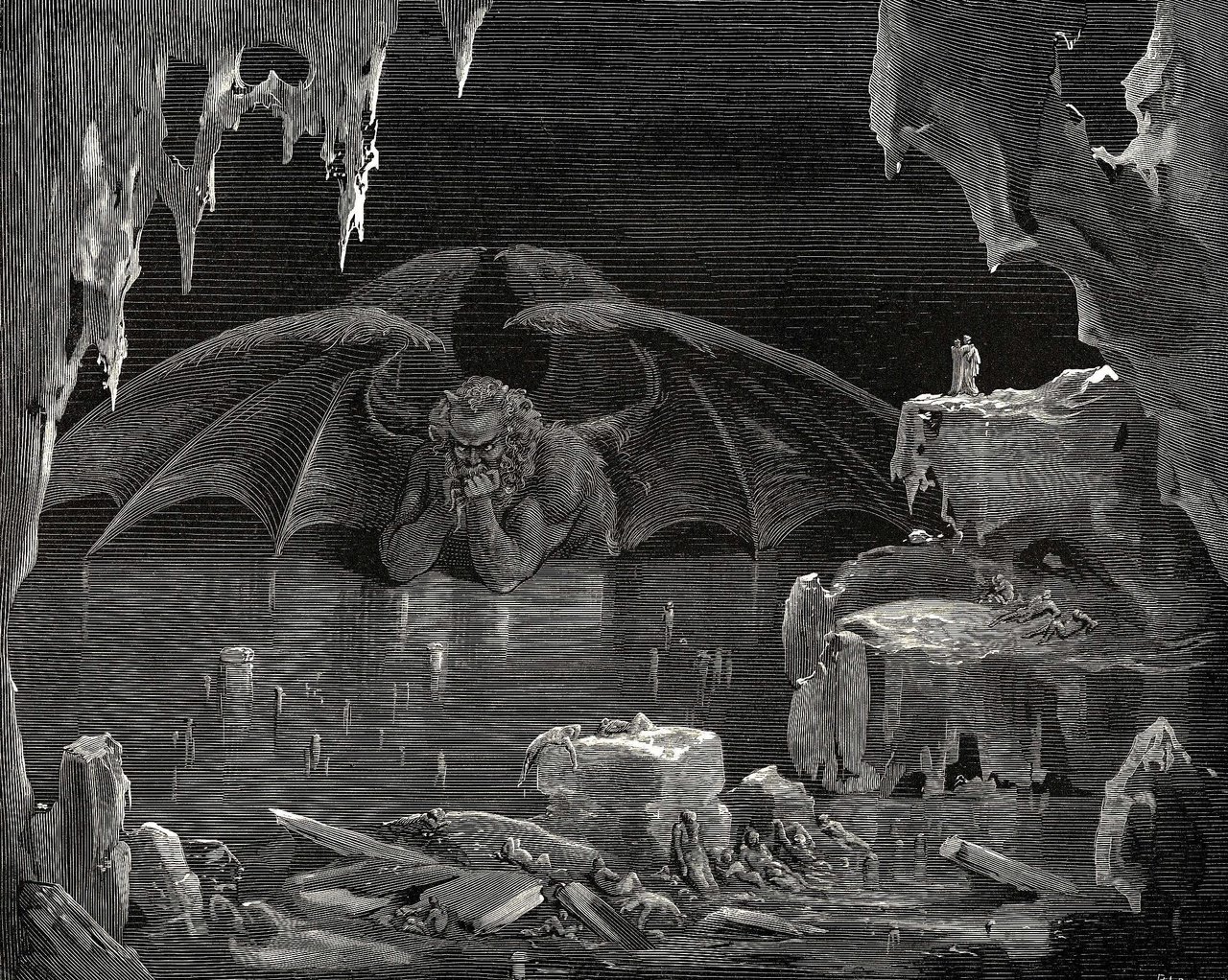
That is the worst thing the medieval imagination was able to conceive, and it is not the place that burns but the place where enormous effort is expended and nothing can move.
And here is the connection I want to make, because it is the whole argument.
Ice is not the opposite of fire. Ice is what fire becomes when nobody is tending it.
A fire is not an object but a practice, in which you choose the fuel and feed it and bank it and decide how large it ought to be tonight and know when to let it go out, and if you stop asking who and how and why and how much, which is to say if you stop doing the tending, then the fire does not rage. It does something considerably worse, which is that it goes out, and the room gets cold, and you are left beating your wings.
That is the only hell genuinely available to this profession, and it is not a blaze consuming designers but a studio generating a thousand options an hour and refusing none of them, producing more images every year and fewer windows, with enormous output and no heat and everybody extremely busy while nothing at all moves. You could have reached that hell with Photoshop, and a great many studios did, years before any of this arrived.
Which brings us back to the canyon.
Somebody stood at that wall with a bone tube in their mouth and made a decision about where to put their hand, and that is the whole thing, the entire discipline, nine thousand years ago and again this afternoon. The tool made every single mark on that wall, and the person made the only choice that mattered.
Nine thousand years of arguing about the bone pipe and the brush and the lens and the darkroom and the airbrush and the layer mask and now the model, and not one of those arguments was ever settled by examining the instrument, since all of them were settled instead by watching what people did with it, and waiting, and developing taste, and eventually forgetting that there had ever been an argument at all.
So the question of whether AI is good or bad for design is the wrong one, and the four that replace it are the ones we would ask about any fire in any hearth: who is holding it, what are they trying to make, how much of it, and do they know when to stop.
The fire has never decided what gets built and it never will, which means that somebody has to hold it, and the hand is the thing that decides. In that canyon, the hand is also the only thing that is not in the picture.
LILU is a creative, branding and web development studio based in New York City, partnering with teams on brand, design, web development and digital.
Start a conversation